
I don’t have to see it. I can feel it!
I can get pretty hung up on whether my technical ability is ‘good enough,’ whatever that means and whoever gets to decide.
I have daily quarrels with perfectionism.
And my creations rarely match my visions for them.
But sometimes, if I can gently unfold my grip on ‘getting it right,’ and pause to consider why I paint, I remember that I like the actual painting process… the squeezing out of gorgeous blobs of color on a palette, the choosing that one brush that will make the mark I’m looking for. I do love the beginning stage when anything is still possible and I haven’t made any mistakes yet!
To be honest, I’m not wild about the “messy middle” where it feels like I might have lost my way. I usually just walk away from the frustration, washing out my brushes, and letting my unconscious percolate on the piece for a while. I am getting better at returning. It used to take months, but now, I usually return with fresh eyes in a day or so. That’s an improvement.
Even more than the process though, there is another, more compelling reason that I create. I make art because I like the way my art makes me feel.
When I look at a painting of a sunset, I feel myself exhaling.
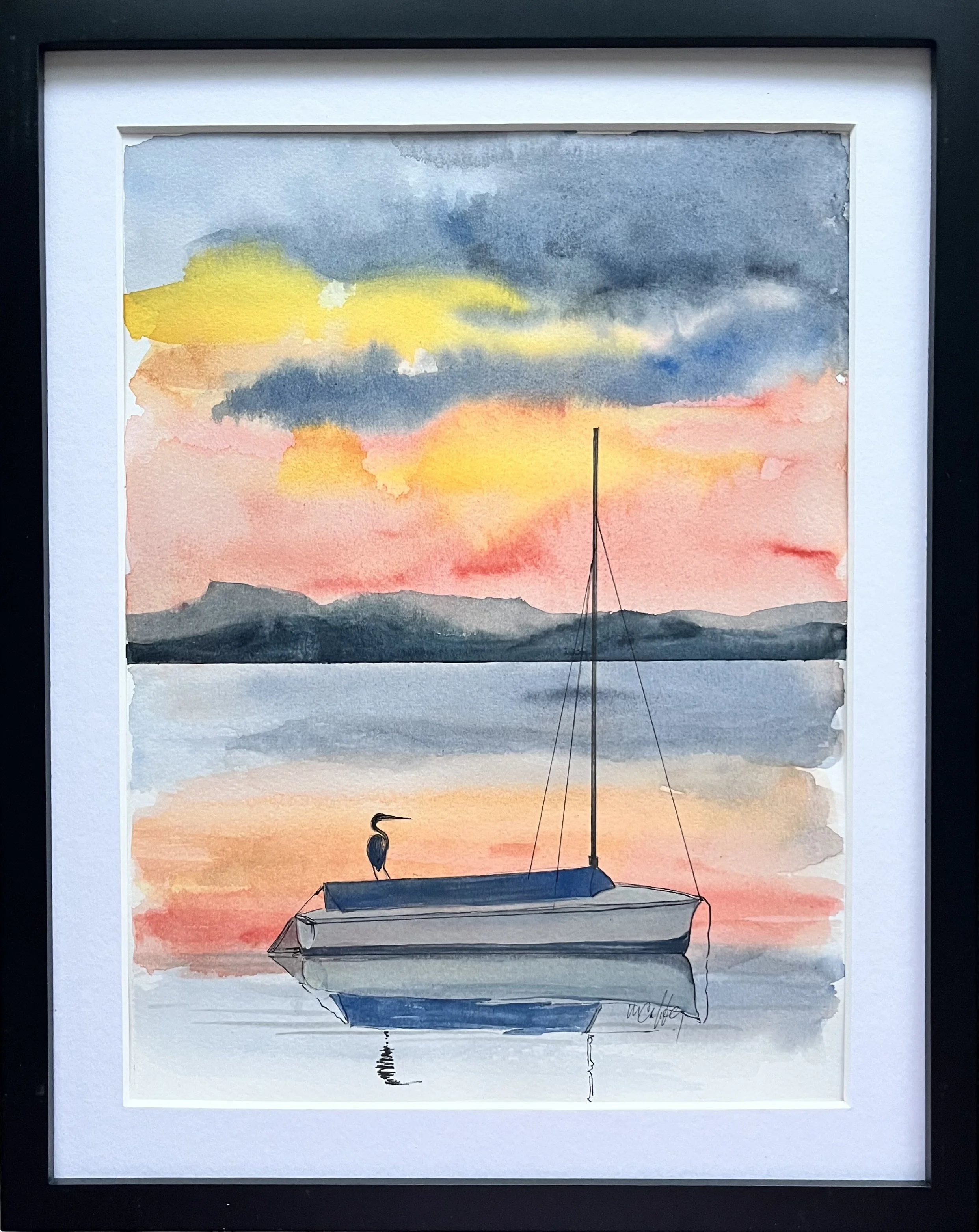
The Night Watchman
When I look at a drawing of a sleepy dog, I feel my shoulders softening.
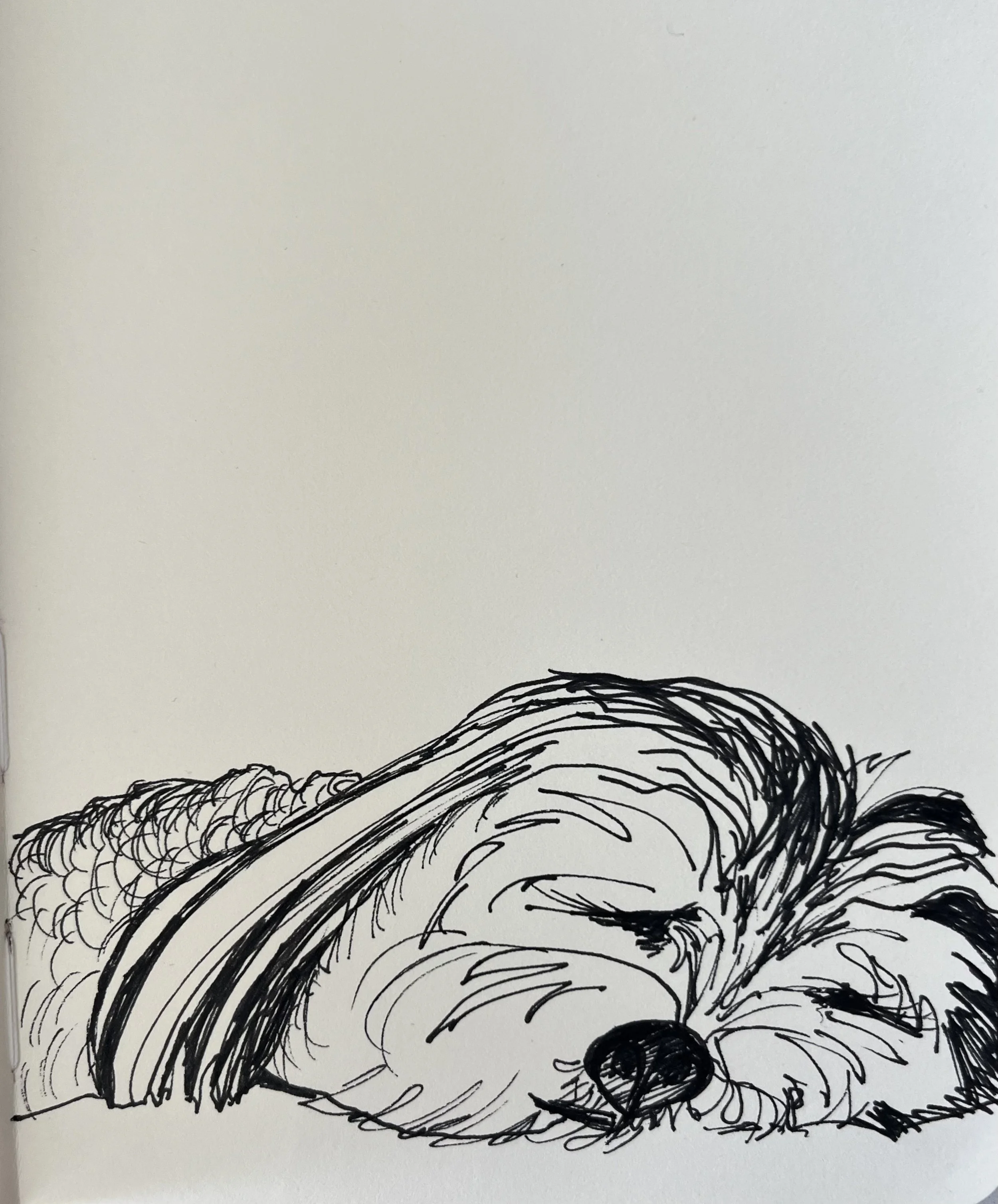
wee sketch from my art journal
When I look at a funny face, I smile.
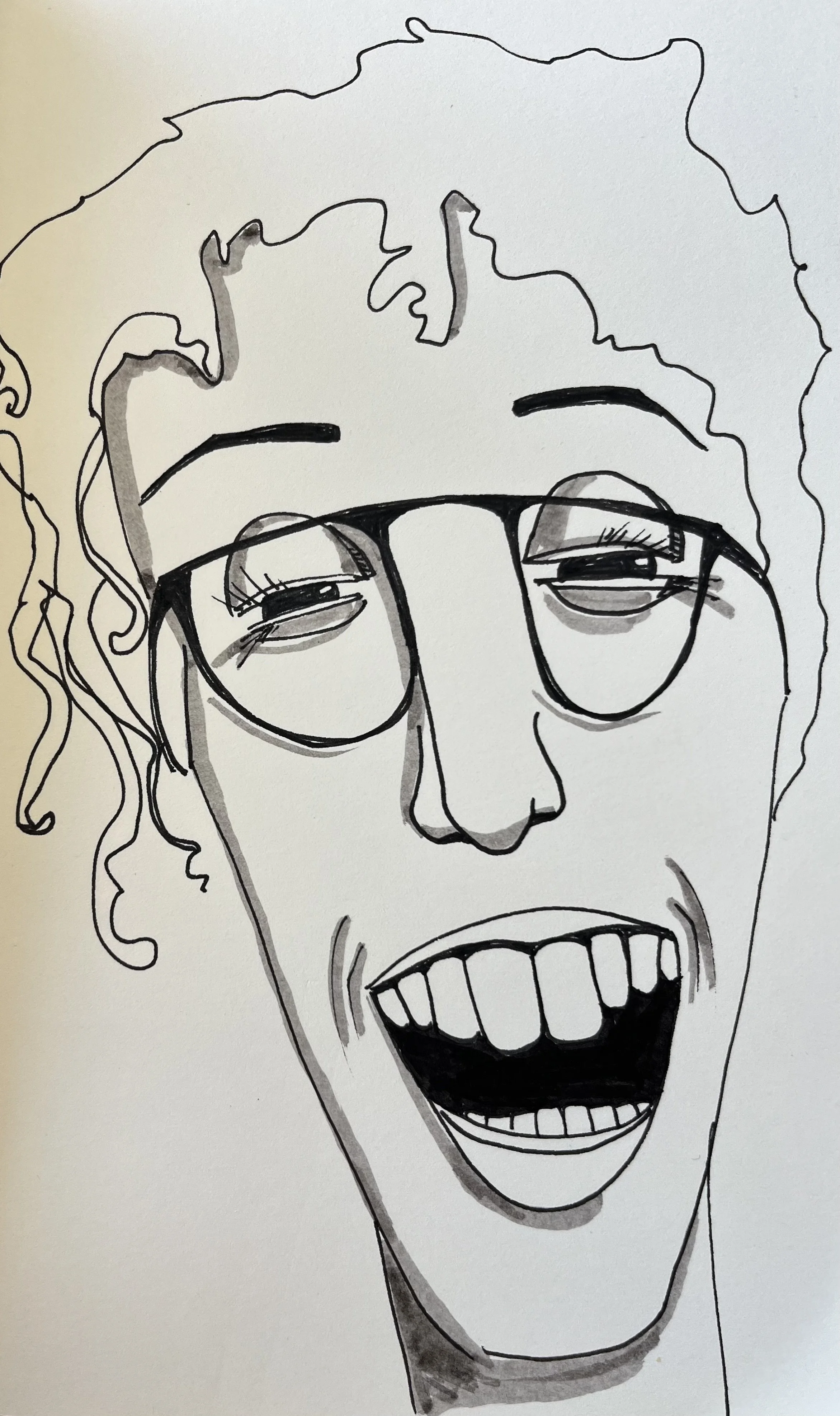
wee sketch from my art journal
My art makes me feel something.
Sometimes, it makes me feel like turning the page! But that’s an acceptable feeling too!
I was sitting with a friend recently, talking about my latest painting series of the heron perched on a sailboat watching the sunset. I described the process I followed with each iteration to create three paintings, two of which were sold as commissions and one - the experimental piece - was still available for sale. I wrote in detail about that process here. But the amazing part was when she said she wanted to buy the painting — without even seeing it! I was rather shocked. When I asked her about that, she said something that landed deeply:
“I don’t have to see it; I can feel it!”
Wow! That is the power of story and the power of art. I told her my story about how the paintings came into being. My story reminded her of her love for herons, her time spent on the water, and adventures on her sailboat. My story and my painting invited her to feel those feelings that are alive in her memory. It made her feel something.
Her statement made me want to be more intentional about creating art that invites the viewer to feel something. In these troubled times, creating has become an essential act, whether you create art, or poetry, or make your own corner of the world a bit more beautiful.
Art that brings us to a place of calmness or joy becomes an act of resistance because noticing the beauty around us keeps us from falling into despair.
Art that grabs your attention and makes you feel something has the power to pull you off automatic pilot. We are in this world as feeling humans, but so often we turn away and numb ourselves from seeing all that is wrong. In order to outweigh the ugly and mean in our world, we need to create uplifting and calming pieces, ones that make us laugh or think or feel something!!
How do you create an image (a scene, a face, a gesture) that conveys a feeling?
Think of a time and a specific place when you were filled with joy. Maybe a family gathering, or a special celebration, or a walk in the woods on a cool morning.
Close your eyes and use your imagination to bring you into that place. Take time to notice all the vivid details. What does it look like? What sounds can you hear? What smells do you remember? What textures? What does it feel like to be in that place? And now consider what you feel like when you are in that place.
Creating a piece of art that evokes a feeling requires you to tap into the feeling you want to convey and express it with particular lines, colors and shapes that are meaningful to you.
This may take some discernment: How do smooth curvy lines feel to you compared to sharp jagged lines? Do you prefer bright bold colors or muted soft colors? How do big expansive shapes feel to you compared to meticulous detail work? Bonus: As you explore these choices, you may sneak up on “your voice” or “your style” without realizing it! Play with all of it and see what feelings each choice brings up for you. No one else can make these choices for you. Choose you!
Painting Poetry
Dropping down to its essence, painting is like poetry. It matters little that you have the punctuation right or the proper capitalization. What does matter is how the words dance together in your head to create the feeling you intend.
As I was talking with my friend, I noticed how similar writing poetry is to visual art. The phrase “painting poetry” sparked something in me. What does it mean to create a painting like a poet would write a poem, editing the words down to the most essential elements?
I’m speculating that the less I say in a painting (beyond this bare minimum), the easier it becomes for the viewer to fill in the details she wants to see. The easier it would be for the viewer to extract the feelings she wants to feel because she would be an active participant in the painting. At the very least, this exploration feels like a curious solution to overworking paintings.
So watch for more space in my paintings, to give myself space to breathe and allow the viewers to step into the painting and listen to their own feelings.
There is still beauty and peace and happiness in the world. Today, look for pockets of wonder and awe, and be open to what you will find.
My heart is filled with wonder and awe and deep gratitude for you, my dear. I love writing to you with words of hope and inspiration, and I love to hear back from all you creative souls who read my emails!
I’m so grateful that we are on this journey together!